Strategic employee development in companies
Learning & Development: How companies strategically anchor learning
Companies today face the challenge of not just offering learning, but actively managing it. Learning & Development connects further education with corporate goals and makes competency development a strategic success factor. This page illustrates how modern L&D works and what truly matters.

What Learning & Development means today
Why competency requirements are changing faster
Companies today operate in an environment that is continuously changing. New technologies emerge in short cycles, markets respond more dynamically, and many activities are evolving more quickly than just a few years ago.
What employees confidently mastered yesterday is no longer automatically sufficient tomorrow. Knowledge becomes outdated faster, while new skills are needed simultaneously.
💡 The speed of economic change makes continuous skills development a central task for companies.
For companies, this means: Learning can no longer be an occasional offering. It becomes a prerequisite for remaining capable of action in the long term.

Learning today concerns the entire workforce
Learning & Development is often associated with executive programs or specialized training. However, in practice, the need extends much further.
For example, when new production systems are implemented, digital processes established, or safety requirements adjusted, often large parts of the workforce need to understand and safely apply new processes. This is also true when companies introduce new products or services to the market or when new employees need to become productive quickly. Therefore, a structured onboarding is an important component of modern learning strategies.
💡 Modern Learning & Development is not only aimed at knowledge workers but at all employees of a company.
Companies particularly benefit when knowledge is not only held by individual specialists but is built more broadly. This makes it easier to implement changes sustainably, teams remain capable of action, and internal know-how grows with the demands. External partners still retain their important place — however, it is crucial that critical competencies remain anchored within the company.
💡 Companies remain more resilient when essential know-how is built and developed internally.
Further Education vs. Learning & Development: A Key Difference
Act reactively or shape the future
Further education is often understood as a collection of individual measures: A seminar here, a training there — usually when a concrete need arises. This approach helps in the short term but remains reactive.
Learning & Development follows a different logic: Instead of only reacting to requirements, companies define early on which skills will be critical for success in the future and systematically build these up.
Depending on the industry, this can look very different, for example: An industrial company increasingly requires digital process expertise, a sales department requires stronger data-driven decision-making capabilities, while in customer service, the confident handling of AI-supported tools becomes more important. Those who recognize such developments early can specifically prepare employees for them.
💡 Further education responds to concrete requirements, while Learning & Development prepares companies specifically for future competency needs.

Why Future Skills Must Be Built Early
A quick look into practice clearly shows the difference: When new software is introduced, immediate training needs often arise. However, strategically thinking companies go a step further: They assess early on which competencies will become more important due to such changes.
This prevents companies from starting qualifications only when the pressure is already high. Employees can get acquainted with new topics in good time, processes remain stable, and transitions proceed much more smoothly.
Individual trainings maintain their fixed place, especially when new knowledge is needed on short notice: For example, if a legal requirement is adjusted, a machine is replaced, or a product is updated, employees can be quickly brought up to speed through targeted training.
However, trainings have their greatest impact when they are part of an overarching development strategy.
If learning is not managed strategically: What risks do companies take?
When Technology is Faster than Qualification
Companies regularly invest in new technologies, such as automated production facilities, cloud-based software, or AI-supported applications. However, the expected effects often do not materialize at first because employees must first learn to handle the new systems safely.
For example: When a digital ERP system is implemented, familiar workflows often change. If preparation is lacking, uncertainties arise, bookings are delayed, and processes come to a halt.
💡 The economic benefit of new technologies only fully materializes when employees can work with them safely.
A similar situation arises in production: Modern machines provide huge amounts of data regarding quality or utilization. If employees cannot interpret this information correctly, important optimization potentials remain unused.
It is not the technology that determines success, but the ability to effectively utilize it.
💡 Technological investments only realize their value when the development of competencies is considered.
Companies that plan for training early on significantly shorten the startup phase. Teams gain confidence more quickly, error rates decrease, and new processes stabilize sooner.
💡 Strategic Learning & Development ensures that innovation is not only introduced but also effectively utilized.

Growing Skill Gaps in the Company
Skill gaps arise not only from new technologies. Often, tasks, responsibilities, or collaboration develop faster than the existing capabilities.
A typical example: A company is growing rapidly, teams are getting larger, and projects are becoming more complex. Employees suddenly take on coordinating tasks for which they lack experience. Decisions take longer, coordination increases, and priorities remain unclear.
💡 Competence gaps often only become apparent in daily work, for example, when tasks increase, but skills do not develop at the same pace.
If such developments are overlooked, efficiency gradually decreases. What once worked smoothly now requires more coordination and ties up additional resources.
💡 Strategic Learning & Development helps companies identify competence gaps early and address them purposefully before they become a burden.
Dependency on the External Labor Market
Those who want to cover essential skills solely through the external labor market come under particular pressure when qualified professionals are scarce or needed on short notice. Job vacancies remain unfilled for longer, projects are delayed, and existing teams have to take on additional tasks.
💡 High dependence on the labor market makes companies more vulnerable to delays and capacity bottlenecks.
Outsourcing and the targeted use of external experts remain important and often sensible tools, for example, to respond flexibly to spikes in orders or to bring specialized know-how into the company. However, it is crucial to determine which competencies are needed on a lasting basis and therefore should be developed internally.
💡 Companies remain more stable when critical competencies are anchored internally and external resources are used to complement them strategically.
Learning culture in companies
Strengthen the learning culture in your company: Our free e-book shows you 5 levers, practical tips, and checklists for sustainable training.
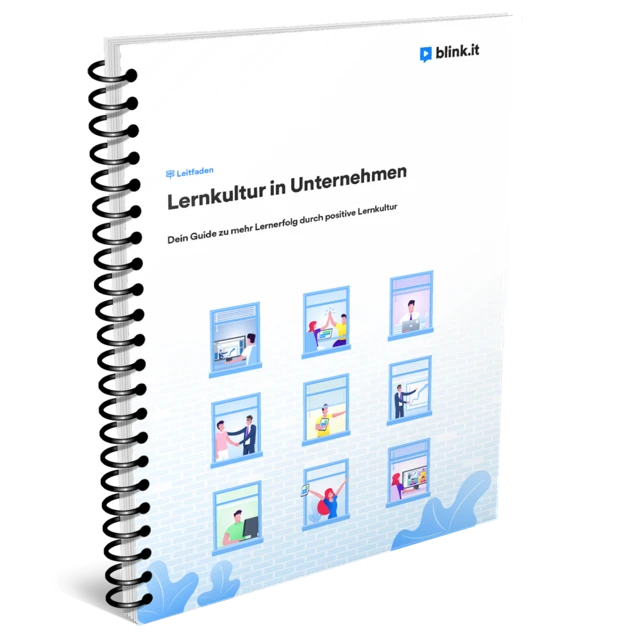
Learning culture as the foundation of sustainable employee development
Why Learning Must Become Part of Daily Work
Strategic Learning & Development only unfolds its effects in an environment that supports development. Learning should therefore be understood as not an additional task, but as an integral part of the work.
To achieve this, realistic framework conditions are needed. Short learning units can be directly integrated into everyday work, fixed learning times create commitment, and practical content helps employees apply new knowledge immediately. Learning in the process — for example, through short briefings, collegial exchanges, or digital support — also reduces the additional time required.
Companies benefit in multiple ways: employees remain more competent, changes proceed more smoothly, and new knowledge spreads faster.
💡 When learning is understood as part of work, it strengthens stability and adaptability in the long run.
The Role of Leaders
Whether learning actually takes place largely depends on the behavior of leaders. They set priorities, manage expectations, and shape the importance of development in everyday work.
This is particularly evident in 3 points:
Leaders should actively plan learning times, conduct clear development discussions, and regularly show which skills will become more important in the future.
Equally crucial is the message to employees that learning is explicitly desired, but not in addition to daily business, but as part of professional work.
It is also helpful if leaders visibly learn themselves, share knowledge, and address development. This creates orientation and lowers the threshold within the team.
💡 Learning establishes itself particularly where leaders clearly demand, enable, and exemplify development.
This creates an environment in which employees do not perceive further training as an additional burden, but as a natural part of their professional development.
💡 Leadership makes the difference between isolated learning and a lived culture of development.

Error Tolerance and Knowledge Sharing
Where employees can share experiences and try new things, learning accelerates automatically. An open attitude toward mistakes supports this process, but not as an invitation to carelessness, rather as a basis for further development.
At the same time, the opportunity for personal and professional development strengthens the motivation of many employees. Those who feel that they can learn, grow, and develop new perspectives often remain connected to their work environment longer and feel more included.
💡 People remain engaged where they can develop and learning is explicitly supported.
Companies that encourage knowledge sharing and enable development thereby create not only better learning conditions, but also increase their attractiveness as employers.
💡 A culture of sharing and learning strengthens both employees' skills and their loyalty.
How companies systematically build competence development
Identifying future competency areas
The first step is to gain clarity about future requirements. Guiding questions can help to categorize developments early on:
Which skills will secure our long-term competitiveness?
Which roles and tasks are likely to change?
Which technological developments will influence the way we work?
Which legal or regulatory changes are coming our way?
Which political or economic trends could affect our business model?
What expectations will customers have in the future for products, services, or advice?
In which areas do we need more cross-functional collaboration?
Which skills will be crucial for driving innovation?
Companies that answer these questions early create guidance for their personnel development and can initiate the right training and educational measures at an early stage.

Make competency development visible and controllable
In order for employees to be able to develop purposefully, transparency is needed. Those who know which skills are in demand and where their own strengths or areas for development lie can approach learning much more consciously.
Digital learning offerings facilitate this individualization. Development measures can be better aligned with areas of responsibility, levels of experience, or career goals, enabling employees to build exactly the competencies that are relevant to their role.
At the same time, employees benefit from keeping an eye on their own development. They recognize earlier where they can further qualify, contribute their own ideas, and take on more responsibility for their learning journey.
💡 When employees understand and can shape their development, learning arises not only from requirements but also from their own motivation.
Digital learning formats as enablers of modern L&D strategies
Scaling Learning
Digital learning offerings enable companies to reach large groups of employees simultaneously and tailor specific content from the learning catalog to individual roles or development goals.
The key advantages are clear: Learning content can be quickly provided, used across locations, updated as needed, and repeated without significant organizational effort. At the same time, companies maintain an overview of who has completed which qualifications.
💡 Scalable learning combines reach with individualization and makes competence development planable.
Flexibility for Different Roles
Not all employees work at a desk or have fixed working hours. Mobile and digital learning offerings allow employees in production, service, or field sales to access learning content and integrate learning times flexibly into their daily work routine.

Modern learning platforms also open up access for employees without their own email address: for example, production staff can log in using their personnel number and similarly participate in the digital learning offering. In this way, almost any type of workplace can be integrated into skills development.
💡 Modern Learning & Development reaches employees where learning is organizationally possible — regardless of role, workplace, or access requirements.
Updating knowledge faster
When framework conditions change, learning content must be adapted just as quickly. This applies, for example, to new legal regulations on occupational safety, updated compliance guidelines, or changed internal processes. Digital learning formats make it easier to revise such content promptly and make it available to all affected employees without having to plan for long lead times.
💡 Companies remain adaptable when knowledge in the form of digital learning content can be quickly updated and disseminated.
Why strategic employee development needs a reliable learning infrastructure
Making Complexity Manageable
As soon as learning takes place not only in isolated instances but involves many employees, different roles, and multiple topics, the coordination effort increases significantly. Particularly affected are personnel development, HR, and managers, who must plan, prioritize, and support learning offerings.
In practice, this means that content must be made available for different target groups, learning progress must remain traceable, and new requirements must be able to be integrated at short notice. Without clear structures, confusion quickly arises: Who has learned what, what is mandatory, what is optional, and where are the gaps?
This way, learning does not become an ongoing organizational construction site but a manageable component of employee development, even as volume and complexity increase.
Make development measurable
A reliable learning infrastructure not only creates an overview but also enables companies to make competence development traceable. Especially when many employees are learning in parallel, transparency becomes a prerequisite for informed decisions.
For example, it becomes possible to see which qualifications have already been achieved, where there is still a need for development, or which teams are well-prepared for new demands. These insights help HR and managers plan personnel measures more effectively and steer developments early on.
💡 Only a stable learning infrastructure makes competence development visible and thus strategically usable.

Anchoring Learning Processes Long-Term
A reliable learning infrastructure ensures that competence development does not depend on isolated initiatives or short-term programs. Instead, established processes are created that anchor learning permanently within the company.
This is evident, for example, in the structured onboarding of new employees, in regularly scheduled mandatory training sessions, or in clearly defined development offerings for various roles. Such processes create reliability and ensure that learning doesn't get lost in day-to-day business.
💡 Only stable structures make learning a permanent part of employee development rather than an occasional measure.
At the same time, companies gain planning security: Qualification is organized in a traceable manner, responsibilities remain clear, and even with growth or changes, competence development remains manageable.
💡 Long-term anchored learning processes strengthen a company's adaptability.
The role of learning platforms in a modern L&D strategy
Learning Platforms as Strategic Infrastructure
Learning platforms consolidate content, structure development offerings, and facilitate the management of learning processes. As part of a reliable learning infrastructure, they help companies organize competency development efficiently and sustainably.
Moreover, they improve the learning experience itself: Multimedia content, short learning units, or playful elements can increase motivation and ensure that employees engage more actively with new topics. At the same time, digital formats reduce absenteeism, for example, because travel to in-person events is eliminated and learning times can be planned more flexibly.
Further benefits quickly become apparent in everyday life: content can be delivered consistently, knowledge remains easier to keep up-to-date, and new employees can be onboarded in a structured manner. This creates a learning offer that remains both planable and adaptable to future requirements.
💡 Learning platforms combine structure with a contemporary learning experience and support companies in sustainably shaping competency development.
With a learning platform like blink.it, companies can centrally organize learning offerings, roll out development measures specifically, and reach employees regardless of time and location. In this way, learning becomes an integral part of strategic employee development.
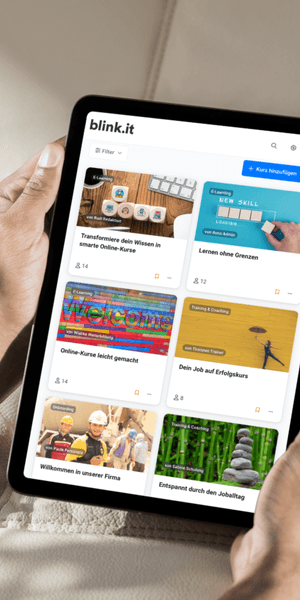
Connection of Learning and Corporate Goals
The strategic benefit of a learning platform arises especially when it is clearly aligned with the goals of a company. Learning then not only supports the individual development of employees but also visibly contributes to central themes such as growth, quality assurance, or innovation capability.
With a learning platform like blink.it, qualification measures can be specifically aligned with business priorities: for example, when developing new business areas, implementing changed processes, or preparing teams for upcoming demands. Companies thereby create a learning environment that does not leave development to chance but actively contributes to the implementation of their strategy.

💡 Learning & Development becomes particularly effective when skill development is consistently linked to the objectives of the company.
Conclusion: Learning & Development as a strategic success factor
Learning & Development is not a voluntary additional offer for employees, but rather an expression of a company's ability to continuously develop.
Companies that strategically embed learning strengthen their adaptability and specifically build competencies for future requirements. What is crucial is less the number of trainings than a clear orientation: What skills will be needed tomorrow, and how can employees be adequately prepared for them in time?
Often, a few consciously set steps are enough: for example, clearly defining areas for development, integrating learning more into everyday work, and planning competence building for the long term.
Those who actively promote Learning & Development not only create better development prospects for employees but also establish a stable foundation for sustainable business success.
FAQ: Learning & Development
What belongs to a successful Learning & Development strategy?
An effective L&D strategy is aligned with the future competency requirements of a company, defines clear areas for development, and establishes reliable structures for continuous learning. It is also crucial that competency development is linked to the company's objectives and that learning is established as an integral part of work.
What is meant by Learning & Development (L&D)?
Learning & Development describes the strategic development of skills within a company. The goal is to continuously develop employees and align competencies specifically with future requirements.
What is the difference between further education and Learning & Development?
Further education usually involves individual training sessions on specific topics. Learning & Development goes beyond that: it follows a long-term approach, where competence development is systematically planned and linked to the company's goals.
Why is Learning & Development becoming increasingly important for companies?
Technological developments, new market demands, and changing job profiles mean that skills must be updated more quickly. Companies that strategically manage skill development remain more adaptable and better prepared for changes.
What advantages does strategic Learning & Development offer?
It helps companies to close skill gaps early, to develop employees in a targeted manner, and to anchor knowledge permanently within the company. At the same time, it strengthens employer attractiveness and supports long-term growth.
What role do leaders play in Learning & Development?
Leaders create the conditions for learning by clarifying development goals, enabling learning times, and actively supporting ongoing education. Their behavior largely determines whether learning actually takes place in everyday work.
How can companies integrate learning into everyday work?
Short, practical learning formats, well-planned learning times, and content directly related to daily work facilitate integration. When learning is understood as part of the work, acceptance among employees also increases.
Why is a learning infrastructure important for businesses?
A reliable learning infrastructure ensures clear processes, creates transparency about development statuses, and helps to manage qualification measures efficiently. This makes learning a consistently planable part of employee development.
What advantages do digital learning platforms offer?
Digital learning platforms enable scalable learning, reduce organizational effort, and facilitate the updating of content. At the same time, learning offerings can be tailored more individually, and employees can be reached regardless of time and place.
Which employees are suitable for digital learning?
Digital learning offerings can today be designed in such a way that almost all roles can be involved: from office workplaces to production. Flexible access allows for learning even in places where fixed workplaces or personal email addresses are not a given.
How to successfully enter strategic Learning & Development?
A good start involves identifying future competence requirements, setting development areas, and gradually structuring learning more. Often, clear priorities are enough to initiate sustainable development.